Red's Wrap
Happiness. It's relative.
Prepare a Place For Me
There was only one reason why my father would be calling me. My mother must be dead.
He explained how it happened, how just last week he had given up taking care of her at home, that for the third time, she’d gone limp in the bathtub and he’d had to call the fire department to come lift her and take her to the cherry wood bed they’d bought as newlyweds 64 years before. He apologized to me. If he hadn’t been holding their ancient wall phone, he would have been wringing his hands. She had only lived a week in the Alzheimer’s Unit and he had visited every night, he said, taking tapes of the music he thought she would remember and playing it on the ancient Press Play tape player they kept in the basement.
He was sure she still knew him. He told me how she had kissed his hands when they last said goodbye. She had taken both of his hands in hers and kissed his hands. I couldn’t imagine it. It was my mother whose hands would be kissed. It was my mother’s impossibly soft cheek and the smell of her face powder and English Lavender soap that drew us to her seeking the blessing of kissing her. Alzheimer’s had changed a lot about her.
The realization that I was, temporarily at least, sibling in charge hit me hard after I got through Chicago traffic and on to the smooth raceway across western Michigan that is I-96, mile after mile of rolling countryside with no interruptions except the tiny roadside wineries giving free shots to interstate drivers. I found every possible reason to delay. I sampled the wine, hunted for snacks at massive truck stops, and even pulled over to check the old Michigan map to make sure I hadn’t suddenly forgotten how to drive home. What was I thinking being the first responder on the scene of a catastrophe? That was my brother’s job. I stalled as long as I could, going the speed limit and not a mile faster, but eventually I made it to my folks’ driveway and within thirty seconds, my dad was standing at the screen door.
“Thanks for coming, Janice,” he said, like I was the last guest to leave a dull party. To add to the oddness of the night, my father then hugged me. I was 53. My father must have hugged me before this night, but I don’t remember it ever happening. So when my father hugged me, I told him I needed to go to the drugstore right away. “What do you need? We probably have whatever you need here,” he said.
“I need to buy make-up, Dad. I left home without my make-up. So I need to go to the drugstore and buy stuff, you know, like mascara,” I answered. Barely having put my keys down on the table, I grabbed them back up and started toward the door. “I’ll be back in 15 minutes.” As I walked out the door, I heard the familiar screech as he pulled the lever to bring up the footrest on his La-Z-Boy rocker. He was sitting in his chair where he belonged, I thought. In a minute, he’ll turn the TV on and resume watching CNN with the sound muted and then he’ll pick up the book on top of the stack next to his chair and start reading where he left off when he’d heard my car in the driveway. I knew exactly what he was doing. I felt relieved that he was doing what he always did. He wasn’t crying or hugging me. He was being himself.
The drug store had that fluorescent weird feeling that all stores have when it’s eleven o’clock at night and no one is there except the girl working the check-out and the guy in back restocking the Fritos. I walked up and down the cosmetics department. L’Oreal, Maybelline, Max Factor. I stuck at Maybelline for a long minute looking at the mascara and wondering if they still made the little red plastic boxes with the tiny brush and bar of dark color that required a little squirt of spit to moisten. I remembered the little box in the right hand drawer of the cherry wood vanity, sitting atop an embroidered guest towel that my mother used as a drawer liner, and next to the mascara box was the eyebrow pencil she used on her beautiful, business-like eyebrows, and, sometimes, to give herself a beauty mark low on her right cheek. In the evenings, she would sit at her vanity table with the small lamp casting a yellow light in the darkness of her room, a place so serene and cool and off-limits, and she would paint her nails red leaving perfectly lined half-moons. She was as ephemeral a person as ever lived on this earth and she was not going to be there when I went home. Was she?
We talked about my mother’s funeral. “Whatever you think is right, Dad,” I kept answering whenever he asked what to do. Should we have a graveside service or a full-fledged funeral? My father, one practiced at snap and sometimes life-changing decision-making, was clearly stuck. For the first time in his 88 years, he was indecisive.
“John thinks we should just go with the graveside service. Not that many people would come to a service at the funeral home. Do you think that’s right?” He had just hung up the phone after the third or fourth phone conversation about this topic with my brother, stuck in bad weather across the country.
“I think that’s fine, Dad.” I didn’t really think it was fine. My mother deserved the whole funeral shebang. Plenty of people knew her and liked her. I didn’t want anything about her funeral being quick or cheap. I held my tongue. I had been estranged from my parents for ten years until just a year ago. It wasn’t my place, I thought, to have an opinion.
We picked out a casket together and the clothes that my mother would wear. I took off my pearl earrings and asked the funeral director to put them on my mother along with the locket my dad had given her 65 years before when they were engaged. Later I drove back to the funeral home to make sure they knew to curl my mother’s hair. In her Alzheimer’s fog, she had taken to wearing a baseball cap over her straight hair. My father may have remembered her curled hair but he couldn’t do anything about it.
Dozens of people came to her wake. My father stood in the center of the large room, my mother lying in her open casket off to the side, and he talked to everyone as if he was hosting a cocktail party. He talked about golf and bowling, two things they had done together. He greeted former employees from their Ben Franklin store and listened to their stories about how wonderful and kind my mother had been to them. He looked toward the door every few minutes to see if my brother was there. But he never showed, still stuck in bad weather in Oregon.
I prepared for my brother not being there the next day when we would follow the hearse 90 miles to her hometown and bury her next to her parents on a hill in the cemetery where, during our estrangement, I had seen their headstones already in place, waiting for them. That night I searched the house for a Bible, looking for the verse that had the words, “Let not your heart be troubled.” My mother said this to me, so many times, but her version was “Let not your heart be troubled, Bunky.” And so I endeavored to find this passage in the Bible with the idea of reading it (without the Bunky part) at the graveside the next morning. I wanted someone who knew my mother to say something at her burial, not just the pastor at the church in her hometown who she didn’t actually know. I could do this, I thought. I can be the child who does this for her mother.
I found the Bible on the bookshelf in the TV room, the inside inscription with my brother’s name. Of course. Late that night, my brother arrived. We set out the next morning from the funeral home, driving in a tiny caravan to the cemetery where I sat on a folding chair next to my father holding the Bible with the passage marked. I said to myself, over and over, “Let not your heart be troubled. Let not your heart be troubled. Let not your heart be troubled.” And I held on to the Bible with both hands. At the end of the service, I stood up, walked across the grassy hill and handed the Bible to my brother. “This is yours, John.”
_____________
Things My Mother Taught Me http://reds-wrap.com/2012/03/17/things-my-mother-taught-me-partly-on-purpose/
The Power of I am Sorry: http://reds-wrap.com/2012/02/15/the-power-of-i-am-sorry/
Blue Eyes
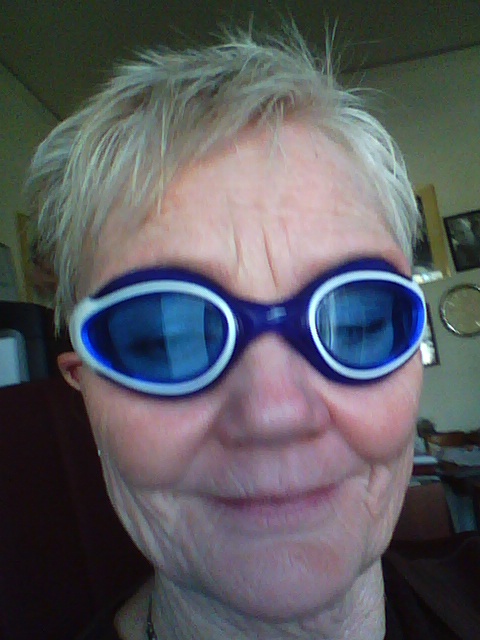 I went shopping with my rat today. The six people who read my series Say It Ain’t So:Rats in the Basement might remember that I referred to my older son as my rat because he can survive anything (including me). I said before and I’ll say again that if a bomb went off this afternoon, it would be Milwaukee’s rats and my son divvying up what’s left of the local McDonald’s.
Anyway, my relationship with my son is interesting, complicated and frustrating. Occasionally, it’s incredibly fun and hilarious, especially when I let him talk me into doing something. I’m not a complete sucker for his charms but pretty close.
When my husband heard my son bubbameisting me about going shopping, I knew he would worry that I would buy the guy a car or refurnish his apartment because I actually once did one of these things. But no, my mission today was to redress the absence of a birthday present (he turned 27 a few months ago) by going to Sports Authority to buy him baseball cleats. I love supporting anything involving sports. It’s so healthy.
So naturally, the trip to Sports Authority didn’t end with a pair of shoes. If I write what else we walked out with, my husband will see it. Suffice to say, one cannot buy a car at Sports Authority.
One thing that we both got were new swim goggles. I needed goggles because I’m about to start a Master’s Swim class that is offered in a public high school. This means that every morning the school engineer dumps a couple of gallons of chlorine in the pool so there is a big risk I will go blind without goggles, much as I hate to wear them.
There isn’t a point to this story except that I had a good time with my son and sometimes that feels a little rare. So it was noteworthy, blog worthy.
“You love that boy,” my husband said this morning. “That boy’s your heart.”
What? Who stole my husband and replaced him with Dr. Phil? But like Dr. Phil, everyone once in a while, he nails it.
Paint It Red

I reached with my paintbrush for the tiny unpainted space between the two bedroom walls and the ceiling that the roller had missed, stretching my back and arm and holding the brush by its very tip to avoid having to step down from the radiator to go fetch the stepladder I should have been using in the first place.
I knew ahead of time I was going to fall. Lying on the floor, I heard my kids run into the room and then run out screaming. My daughter, then about 12, started crying in the hallway as if she’d already decided the time to grieve had replaced the time to help. My younger son stood in the hallway, inching toward his room, typically distant from an unpleasant situation while the older son, fresh from his lifeguard and first aid training, came in and told me to lie still while my eyes filled with blood. Everything was red.
“Oh, no,” my husband said, looking at me and seeing, before I did, how my eyes were going to look in a few hours. “People will think I punched you.”
As predicted, I had two vividly black eyes the next day. I was fine physically. No headache. I had never passed out though looking at my face in the mirror the next morning was jarring enough to make me go weak in the knees. Wildly purple and blue, my eyes looked like a pair of cheap sunglasses had melted on my face.
“Everyone’s going to think I did something terrible,” my husband started in again while I was getting dressed for a big meeting with several county officials, including a couple of folks who worked with domestic violence. “Don’t be silly. I’ll tell them what happened. I fell off the radiator, for heaven’s sake. What’s the big deal?” I replied.
But I kind of wondered. How would people handle it? Would they ask me what happened? Would they laugh about it when I told the story of the radiator and the stepladder and how my freshly (county) trained son came to my aid? Would they think it was funny that my husband was worried about what the world would think about my black eyes?
I don’t know. They didn’t ask. At first, it felt like a game to me, like I’m sitting here with this face and no one is going to ask me what happened. And then it started to make me angry as if they didn’t care what happened to me or worse, they knew what happened but didn’t want to talk about it.
I made a joke at the end of the meeting. “I’m sure you all noticed,” I said with a smile. “In case you’re wondering what happened to me, I fell off the radiator while I was painting the bedroom yesterday.”
Oh, that’s terrible, they murmured and cooed and walked out the door. “Take care, Jan.”
__________
Photo: Photo by Steve Halama on Unsplash
Suck It Up, Sweet Pea
For two weeks, I have been dreading the start of Master’s Swim. I signed up again because my friend Karen had that look on her face that reminded me that doing Master’s Swim felt great, in the abstract anyway. While I was actually at Master’s Swim, it was really difficult, the longest hour I’ve spent since childbirth. The women there were mostly training for triathlons. That’s originally why Karen and I signed up a few years ago. We were actually in a triathlon.
 Here’s us finishing said triathlon. We finished in a little over three hours, plenty of time for Karen to run to the bathroom 16 times and me to peddle the 1200 miles that constituted the bike portion. I was so slow on the bike that Karen kept going ahead and circling back, telling me once, “I’ll be right back. I have to go pass that old bitch in the sweat socks that just passed me.”
People drinking beer and sitting in old lawn chairs along the triathlon bike route cheered for me, “Go, 285!” 285 was the number the triathlon people marked on my arms and legs to identify me when I died, so I thought. Actually it was to sell me pictures later.
It worked. Because I bought this picture of myself getting out of the water after the 1/2 mile triathlon swim across a lake. This feat, which took me 20-some minutes, remains the proudest athletic moment of my life, rivaled only by doing a ballet leg in leotard and tights embellished with fringe on the arms and legs and wearing a faux coonskin cap in the Davy Crockett number for my high school synchronized swimming show in 1965.
 So when Karen said we should go back to Master’s Swim, I said ok, but then immediately started thinking about how noxious it is to be around 30-something year old women with no body fat who do flip turns and breathe only every 12th stroke.
It’s like – What am I trying to prove? I’ve never been an athlete. Never. I never ran, jogged, played tennis, or any of that shit. I did my Esther Williams thing in high school and that was it. I even remember helping my 10-year old daughter ‘train’ for a one-mile fun run by driving next to her in my Toyota while smoking a cigarette, although there was no open can of beer between my knees. Seriously. It was in Shorewood after all.
I don’t know what I’m trying to prove. I had a therapist tell me once that “you are who you pretend to be,” but I don’t have the moves to even pretend to be an athlete although I do have to say I have a pretty perfect front crawl stroke. Esther would be proud.
Driving back to Milwaukee from Madison I pondered this. Why I think I need to do athletic shit that is actually kind of ridiculous in terms of outcome. And I think it’s all about the different ideas of ourselves that we have crammed in our heads that only we know about. Like Stevie Nicks.
 Blasting in the car, Rhiannon. I’m thinking, “People don’t know it but I’m Stevie Nicks.” I look like this grandma but that’s not all there is. I am Stevie Nicks and Janis Joplin and Dolly Parton, for sure. It’s just that no one knows.
A long time ago, when I was about 20 and my grandmother was in her 80’s, I stood by her bed in the hospital, looking at her asleep. The covers were pulled back and I could see her bare legs, thin and shapely as they must’ve always been though I couldn’t have noticed under the one inch sheath that were her support hose. I looked at her laying there and I thought, “She was a young woman once.” She had been beautiful and carefree. She had fallen in love and slept with a man. She had had children and she had been their mother. And their children had children and she became a grandmother. And that’s how I saw her. Except that’s not all she was. Once she was Stevie Nicks.
It’s really confusing, this aging shit. People who are younger, you really need to double down on your smarts and your stamina, collect up all your alter egos and protect their identities. You’re going to need them all later.
It’s Not the First Tomollow, Honey

When our granddaughter comes for the weekend on Friday night, she asks what we’re going to do on the first tomollow (Saturday) and on the second tomollow (Sunday) and then the semi-dreaded but kind of nice third tomollow (School, also known as Monday). I can tell she likes the prospect of three tomollows, each one with special things that we could do.
Time. The loveliness of Friday night. The beauty of tomollows.
This weekend, she didn’t come on Friday night or Saturday night, instead coming late this afternoon. While she was putting her puzzle together, she remarked that she had missed swimming, so could we go tomollow? “No, honey, tomorrow’s school,” I told her. You mean tomollow’s not the first tomollow? “No, sweetie, it’s not.”
So it really hit me – this being my birthday week and all — that from a lifespan point of view, I am probably staring the third tomollow in the face. And for those of you who are younger than me (and that seems to be about 90% of the people I know), this is a very weird feeling.
I haven’t felt like that kid sitting in the inner tube for a long time. She’s not even thinking about tomollows. What an incredible, lovely thing to have – mindlessness about how much time you’ll be alive.
To me, time has become a finite thing.
It’s not like I’ve got a terminal illness but unless I move to Russia and start eating yogurt all day long, I’m not going to be one of those people who live to be 114.
The meter is definitely running and I need to get used to it.
Quilting: A Domestic Violence Story
PART 1
Thirty years ago, I sat all night on the sofa in my upper flat, smoking Benson & Hedges, with my mother’s green and orange afghan wrapped around my shoulders, waiting for my addicted, unpredictable, and sometimes violent boyfriend to pull up in front of my house, get out of his car, and use the key I had given him by mistake to come in and kill us all.
After spending all night on the couch looking out the window at the corner intersection and waiting for his car to pull up, I showered, dressed, got my daughter ready for school, and went to work. As if nothing had happened.
My fear had happened. My lonely, secret, gut-wrenching fear had happened – fear so deep that I was afraid to close my eyes even for a minute lest I be taken by surprise.
When this happened, I was finishing coursework for a Ph.D. I had a job at a human service agency. It didn’t pay a lot but it was a decent job. I paid the rent. I owned a car. I had a good upbringing with decent parents. No one had ever laid a hand on me in anger. No one.
But I was terrified of my boyfriend when he was ‘off’ which he wasn’t always. Just once in a while. The rest of the time, he was mellow and funny, involved in the community, tons of friends, devoted to me.
It was hard to tell what would happen — it was crazy-making.
Women you know this very minute are in this situation. If they are really scared or, worse, physically abused, they can seek shelter, assuming they are willing and able to leave where they live. They can call hotlines and learn how to develop safety plans. Stockpile resources and make a run for it if things get bad enough. I never got to this stage. I believed I could protect myself – at least until one fateful night a year or so later – so seeking shelter, asking for help for my situation never occurred to me. I wasn’t the person with the problem.
He was.
And there wasn’t any help for him.
The question was — was I supposed to change? Change my life, my residence, uproot my child to be safe? He’s the villain and I’m the damsel in distress?
I should have retreated into shelter so he could find the next woman who would try, in vain, to convince herself that how mellow and funny he was outweighed how terrifying he could become every now and then?
I didn’t think so then and I don’t think so now.
PART 2
Not long after the endless night keeping watch out the window, after a bunch of happy evenings with my boyfriend, a trip or two to the racetrack, a drive in the country with a stop at a funky bar, and, oh, maybe a concert or two thrown in, enough to make the distance between that night’s me and me now so wide that the fear became imagined and extreme, an overreaction, not long after that the phone rang one night.
It was my boyfriend’s ex-girlfriend, the woman he’d lived with for five years.
“You don’t know me, but I have things I need to tell you.”
It felt like a wood sliver sliding under my fingernail. “Like what?”
She told me about her twisted arm, the black eyes that kept her home from work and the pillow over her face.
She told me about the apologies and the regret. How he would ask for forgiveness and promise not to do it again.
She warned me. “That’s what he’s really like. He’s not the person everybody thinks he is.”
“Nothing like that has ever happened with us,” I told her, only partially lying because it was the threat, the seemingly imminent possibility, of something like that happening that put me into that weird watching out the window place rather than it actually happening.
“He’s different now. That kind of thing would never happen. I wouldn’t put up with it. First sign of anything like that and I’d be done – that would be it.”
I hung up the phone just as he walked in the door, holding a pizza and a six-pack of beer.
I’d been warned.
PART 3
It went on like this for a couple of years. Long periods of calm interrupted by longer moments of panic and terror.
I remember….a long night watching my boyfriend sleep with a butcher knife in his hand wondering whether he intended to use it on me or himself. Being chased across town and, thinking it was the safest place I could find, pulling up in front of the 5th District Station. Being trapped in the kitchen of my upper flat which, I figured at the time, was probably the worst place in the house to be. Banging the car door against his leg as I tried to pull it closed and flee after an argument in the Dells. Listening to him tapping on my back door all night long wanting me to let him in so he could apologize.
But still he had never laid a hand on me. That had become my bottom line.
I got through the terror by convincing myself that he would stop himself from actually hurting me. But it became harder and harder to believe as time went on, sort of like thinking that even though everyone else’s basement was flooded, mine would stay dry.
It was the classic frog in boiling water. I lost sight of how out of whack my life had become. How unexplainable. How chaotic. How private.
The fight scene. Man and woman in a hotel room in Des Moines. He’s been drinking all day – beer and Irish whiskey. He wants to go out. She thinks he’s too drunk. He threatens. She grabs the keys to leave. He tackles her, pins her to the bed. And puts his hands around her neck.
Calling on angels, she gets out from under his 280 lbs and runs into the hotel hallway screaming. People open their doors and look at her standing there. He’s in the doorway shrugging his shoulders. She is ashamed.
So after the fight scene, while people from the hotel stood and watched, I got my things and my car keys and I left. Wanting to drive home but afraid to, I found an old hotel downtown and checked in to a room on the 4th floor where I pulled the chest of drawers in front of the door and sat curled up on the bed until dawn.
I drove back to Milwaukee to pick up my daughter, back from a two-week Western vacation with her dad. “Hi Mom, you’re late.”
Part 4: The Coda
Two years ago, I went to my old boyfriend’s funeral. I milled around with old and old-looking friends and colleagues, talked to his nieces, now adult women, with whom I’d spent several Christmases so long ago, and every now and then glanced over at the urn that sat on an unadorned table. There was no picture there – no montage of photos from a long happy life. His siblings were furious at him for what they said he had put them through. After so many attempts and threats, including several when I knew him, he had finally taken his own life.
A middle-aged woman standing alone was pointed out to me as his girlfriend. Thinking I should offer my condolences to the closest thing that he had to caring family at the moment, I introduced myself. She launched into a quiet explanation about why she, alone, was responsible for his death. She’d just ended their relationship because of his violent behavior, she wasn’t able to help him. “And now look what happened.”
It was in that moment that it hit me. In the many years since Des Moines, I had fallen in love and married someone else, moved into a big old house and raised a family of four children, started a business, had friends. If I died, there would be a lot of pictures.
He had circled back and started over. If the length of our relationship was a predictor, he probably had four or five more serious relationships, all ending the same scary way.
If all the women who’d known him sat in a circle, we would tell the same story, make a quilt with identical squares. And the quilt would be very large.
This man, to whom we had all been attracted because of his gentle heart and fun-loving spirit, never intended to hurt anyone. Whatever trauma or damage he had in his early life that would explain his violent episodes, no one really knows.
I do know it kept him from having any pictures at his funeral.
Take It Easy
 A powerboat is thrilling. Thrilling, risky, and nervewracking if you’re a person prone to wracked nerves. Any number of things can go wrong – the boat can fall off the trailer, the car can back too deep into the water at the marina, the battery can go dead, the rotors get chewed up by unseen rocks, the engine stall in the middle of the lake or river or you can get swamped by a wave, or, if your boating companion is in love with speed fast enough to make the boat’s bow slap, slap, slap while jetting across two foot swells, you could simply keel over from a stroke from the dreaded fear of flipping.
I loved the idea of a powerboat and we had a little beauty – a 1989 Bowrider, white with mauve accents, with the original teak trim. I loved it so much — but it scared the crap out of me. I’m brave about things with big engines only in the abstract. Riding on the back of my first husband’s Harley Sportster, even with a sissy bar, and zooming up the on-ramp to the freeway remains the single most physically scary thing I have ever done.
So I was sad when my husband decided two years ago, after spending yet another boatload of money on fixing the old boat’s undependable engine, that it was time to donate the boat to charity and give up the powerboating life. I was bummed because cruising the Milwaukee River at about 5 miles an hour, drinking wine and eating pretzels was about the loveliest thing ever but he was bored by that. He wanted a boat to go across Lake Michigan, one we could use on Lake Superior. To me, Lake Superior is for freighters. Although….look what happened to the Edmund Fitzgerald, for heaven’s sake.
While our powerboat was cute and fast and stroke-inducing, our canoe is sublime in all ways. It also is cute and fast, an Old Town canoe that is wide and sturdy with wood/wicker seats. We use wood paddles that came from another canoe a long time ago. My paddle is dinged and worn down but is light and perfect for me. I sit in the front of the canoe and I see and I paddle. My husband sits in the back and steers. He has this honor because he was Color Wars General at Pine Forest Camp when he was 14. Even without this credential, he is an exceptional canoer. He is calm, steady, and can thread the needle with our wide little canoe. I never have to scream, “Look out, look out! We’re going to hit the dock!” I just mellow out up there in front. Minding my business, looking ahead. Just being so very, very, very chill, as they say.
 I know that in a lot of circles canoeing isn’t all that hip. Very old school. Not like kayaking with all the great gear and the sleek look. I wear my old sneakers, roll up my jeans and put on a baseball cap when we canoe. That’s as fancy as it gets. Plain. I really like that.
Plus it’s one thing to see the water from the land but it’s another thing altogether to see the land from the water. And to be going slow enough to really see it. That, I really love.

Say What?
You know how Iron Chef has Battle Mushroom or Battle Egg? And how everyone in Kitchen Stadium watches in awe as the Iron Chef and his challenger create amazing plates of food art to be judged by a panel of people who haven’t been hungry for six months?
Well, I’m doing Battle Ear. In this contest, I am deciding whether to chart a graceful course into what my husband so lovingly calls my ‘descent into deafness’ or become a hot-wired queen of technology where, in addition to two hearing aids, I might have some magnetic coil thing hanging around my neck and FM receiver systems to deal with groups of people. When the wonderful audiologist at the Center for Communication, Hearing, and Deafness told me that I could qualify for DVR assistance, I knew I’d stepped into a new and very different little puddle.
So Step #1 in my own Kitchen Stadium challenge was to go see a doctor at Froedtert who is widely known as the best ear guy in town. Now, ENT (Ear, Nose and Throat) doctors are good but you have to realize (and this was news to me, too) that they split their loyalties three ways. If you’ve got a serious problem with your ears, you need to see a guy who only loves ears and not noses and throats. Remember that, everyone. It might come in handy someday.
So I was waiting in his exam room this morning, reading the citation that named him ONE OF THE BEST DOCTORS IN THE U.S. and going through a very long article about an innovative implant plus hearing aid procedure that achieved great hearing improvements but required an hour long drilling of a hole behind one’s ear.
Ok, I thought. I’m really not keen on surgery, general anesthetic and all that, not to mention the skull drilling. But I figured if that’s what it took, I could do that. Damn, I thought, that would have to give a person one hell of a headache.
So the super doctor in love with ears came in the room and asked the same questions I’d already answered on the intake form. No to every other health problem besides hearing. That’s good, right? That’s a blessing. I’m into counting them lately.
Anyway, so he begins the examination. Has me turn my head one way and then another, have my eyes follow his finger, clench and unclench my teeth. And then he takes this incredibly high tech instrument out.
 This is a tuning fork.
He thrums the tuning fork and holds it behind my ear and then next to my ear. “Can you hear this?” “Can you hear this?”
Seriously. And that was it.
Now I’ve been to audiologists so I have a stack of charts about the nature of my hearing loss but no one knows the cause.
That’s why I came to the best EAR GUY in Milwaukee. The Ear Whisperer!!!!!
Anyway, after his laying on of hands, he stood back, looked at me and said, “It’s hereditary. Doesn’t have anything to do with your age or anything else. It’ll probably get worse for a while and then stabilize. There’s nothing I can do about it.”
This sentence made me happy. First, no skull drilling in store for me. Second, it’s not about my age. I have hearing loss and I am aging but they are not causally related and I like that because the other battle in my personal Kitchen Stadium is Battle Age.
The underlying theme here is lucky. Lucky I don’t have some terrible disease that’s causing my hearing loss. Lucky I have the health insurance to see a Best in America doctor (even if he does use an 18th century diagnostic tool). Lucky to have the cash to pay for all this hearing technology. And, finally, lucky to be able to look forward to being hot-wired.
That’s not so bad.
______________________________________________
If you have hearing loss, these folks are top of the line in terms of expertise and support: Center for Communication, Hearing and Deafness www.cchdwi.org
I’ve written about my hearing loss in another post http://reds-wrap.com/2012/03/28/sweet-nothings-in-my-ear/.
Sweet Nothings in My Ear
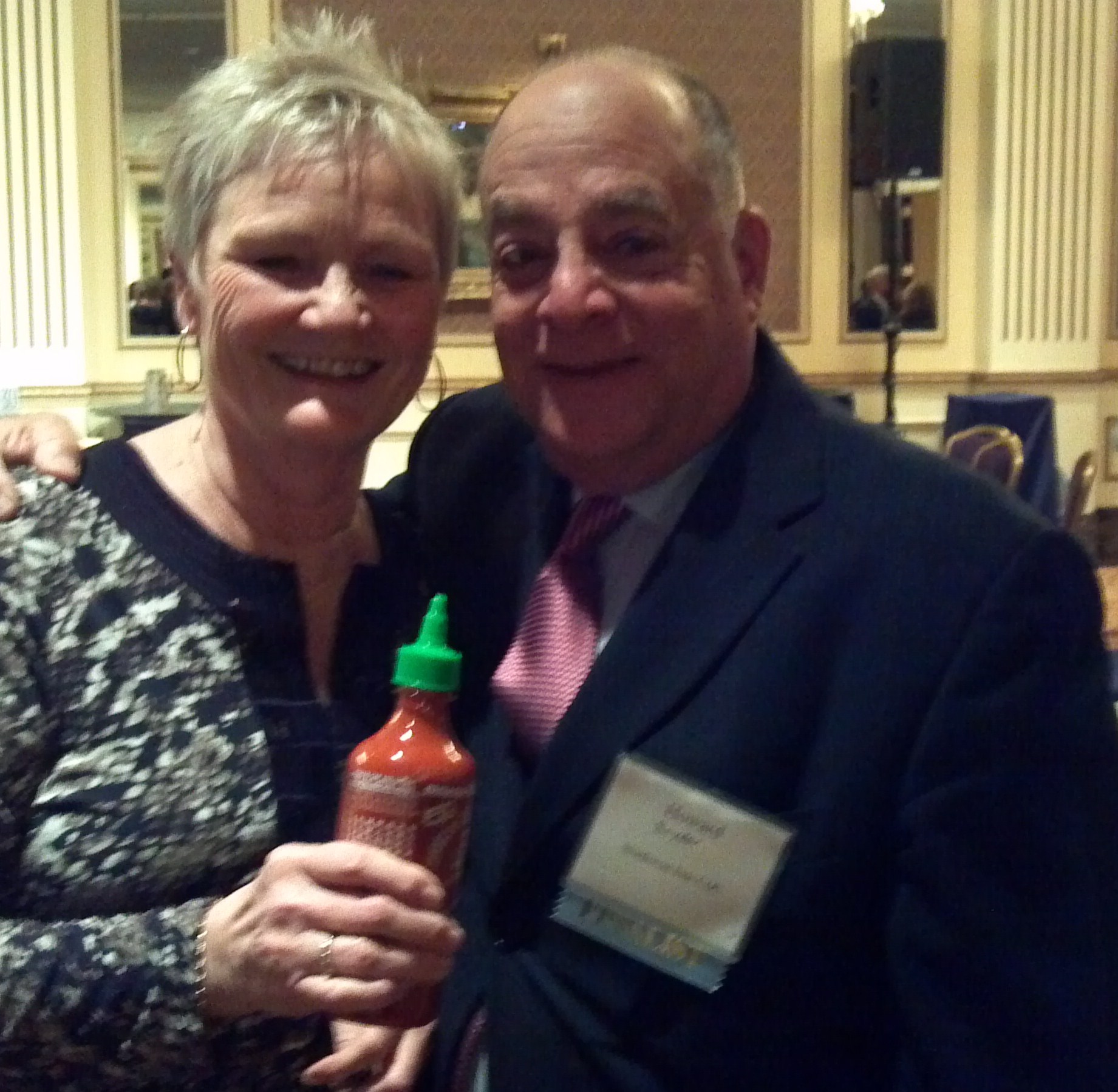 I just came home from a huge event where my husband got an award. The award was a really pretty glass thing that probably weighed a couple of pounds but somehow hot sauce got in the picture. You can tell that he’s pretty happy. So am I. If he hadn’t won, he’d have been moping for months.
But the point of the blog post isn’t about the award, it was about the huge celebration. There were at least 600 people including a lot of people I’ve known for 20-30 years. Wonderful to see people and, of course, to be seen. It’s the ultimate schmoozing event for the community development folks in our city.
My problem? I can only hear about a third of the people who talk to me and then only about half of what they say. If a person’s voice isn’t in that very narrow band of sound that I can hear, I make a decision. If I know them and their facial expressions, I might just fake it for a while. Smile. Smile. Nod. Nod. If my husband is around, he acts as my deaf interpreter and he is getting increasing deft at doing so. He has stopped saying, She’s deaf. She can’t hear you. Which I really thought was both off-putting and a peculiar play for sympathy like look what I have to live with.
So sometimes I meet a completely new person who is eager to talk to me but whose language I can’t discern. This is different than hearing. I can hear the person talking. I just don’t know what he’s saying. Making it louder doesn’t help oddly even though people sometimes will go to great lengths to shout at me. I feel bad, disappointed in myself when the result is for naught. I’m sorry, I still can’t hear you.
Tonight I just told a very nice man whose name tag indicated to me that I ought to talk to him that it was not going to be possible to have a conversation. I pointed to my hearing aids, waved my arms around the room filled with hundreds of chattering people, I’m sorry. He looked at me like oh, ok, should I write you a note? But then he eventually wandered off to the next prospect. It was then I decided to pack it in and come home.
It takes a lot of mental agility to handle a big crowd like this. To smile, small talk, move through the crowd and hope that no one corrals me for a longer conversation. It’s awkward to tell one person that it’s impossible to hear him/her and then be able to talk to the next person because his/her voice falls in the right range. It’s that dog whistle thing. I now gravitate to people I know I can hear even though I might otherwise not be so keen on them.
Of all the rotten, terrible things that can happen to someone, hearing loss isn’t the worse. It is just very weird. It’s hard to handle. It’s hard to own. That’s the most important thing. It is really, really hard to own.
I’ve learned how to do a lot of stuff. I can learn to do this. I can own this.
Head Case
Every time there’s a hit and run accident that’s on the news, I think it involved one of my sons. Not as the person hurt but as the driver. It’s not until I get the make and model of the car that I start to relax although I can keep my crazy ass mind gin going for a couple of days thinking that maybe one of them borrowed the car that caused the accident. It’s only a matter of time, I tell myself, until we get the phone call. I sleep with my phone next to me. It used to be two phones – my cell and the house phone – until I realized that was really fruity-tooty loony. I should just go to sleep with a headset on, waiting for one of my kids to make their one phone call before they’re thrown back into the holding cell with their fifty sweaty new pals.
What is the deal with this?
Why am I so nuts? It’s the question of the ages. Ask my husband. He actually looks across the room at me when I insist that one of our boys was the hit and run driver and calmly refutes my claim with evidence. The time isn’t right, he would’ve been at work. It happened at night, remember he said the lights on his truck were shot? This is kind of him – to respond to me in a rational way but the negative effect is that it makes my initial fear more possible. He should probably say, Stop being a complete crackpot, Jan. But he would never do that even though that has to be what he’s thinking. What he doesn’t say is – neither of our sons would be a hit and run driver. And I think the reason he doesn’t say that, well, I know the reason since we’ve talked about it, is that we both so deeply feel that anything can happen. A split second decision could turn life on its head for any of us but somehow, we feel that they are especially vulnerable.
When I read about an otherwise upstanding young man, a former Marine, hitting someone with his car and then making that split second decision to flee the scene, I can imagine it happening. It’s not the only bad thing I can imagine happening to them but it is on my top five list at the moment. They’re young, they’re Hispanic, they are often in the wrong place at the wrong time. They drink.
When I told my friend Karen about this hit and run fear she said, hey, if something happens it happens. You can’t control things. She’s been Quakerfied so she has become an unusually and unsettlingly calm and centered person. She’s into accepting and letting go. She tells me that my hit and run nuttiness is a metaphor for all the worries moms always have.
I hear her but I don’t get it. I’m not that introspective. I’m just stuck on Press Play whenever these little news triggers occur. My free floating anxiety occasionally gets really fatigued and needs a place to sit down and for a long time, hit and run accidents have been its rest stops.
I’m a 155 lb. amoeba that just responds where I’m poked. And to the outside world, I can appear to be so smart. There aren’t big enough letters for me to write LOL on that one.
So after the recent, terrible hit and run accident, one of my sons came by to do his laundry. Even though a young man, same age as my son, had been arrested in that case, I couldn’t help but press him about where he was, what he was doing at the time of the accident. He’s used to this, I think, because a normal person would’ve gotten annoyed or offended.
We chatted about it. I felt better.
And then he looked at me and said, Ma, I’m not worried about getting in a car accident. I’m thinking about what happened with that guy in the river.
Read more here: http://www.jsonline.com/news/milwaukee/body-recovered-in-milwaukee-river-el4moj0-143836116.html


Snow Door | wisconsinacademy.org
Listen to Jan read her essay “Billy” presented on WUWM’s Lake Effect

Jan’s essay “At the Breakfast Bar” on WUWM Lake Effect

Jan’s essay “The Parish Hall,” on WUWM Lake Effect


“Fury Cannot Touch Me,” Modern Love, NYT, 9/29/11

Recent Comments